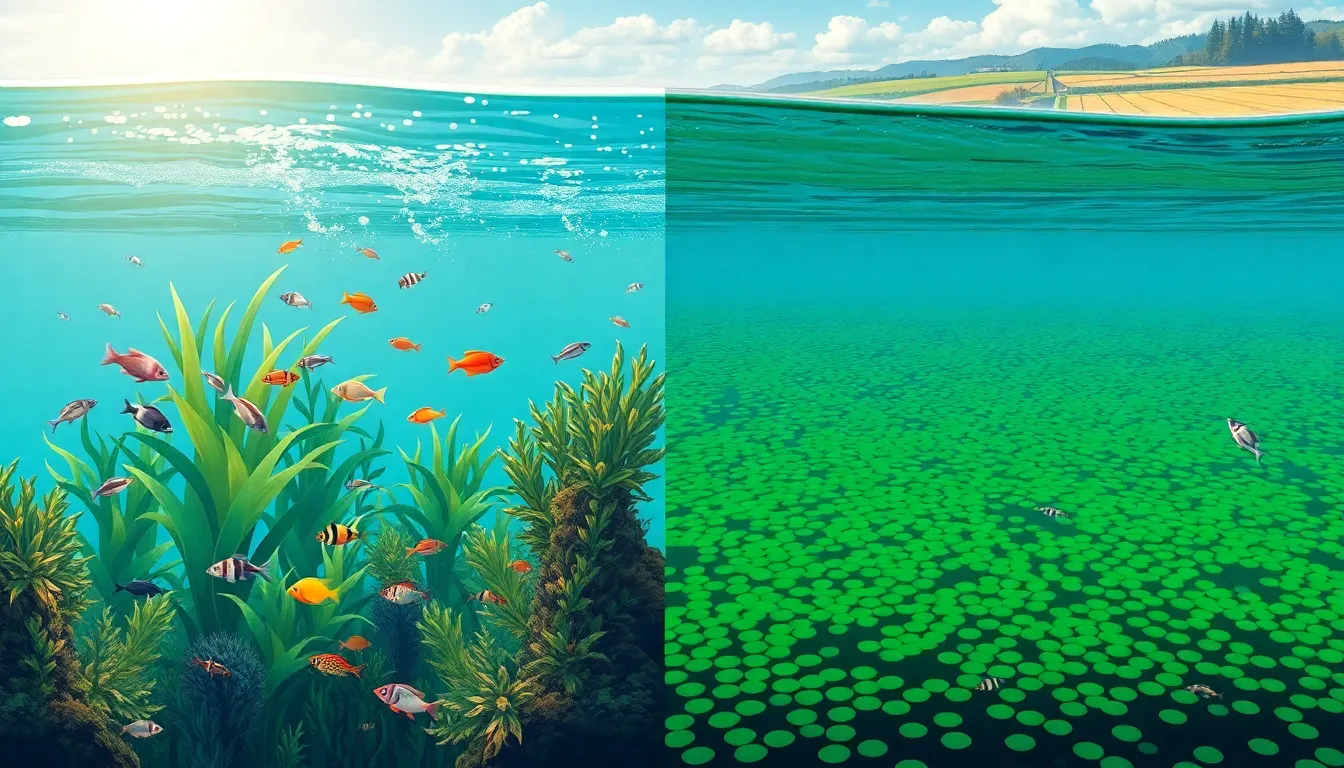
Picture a vibrant underwater garden, teeming with fish and diverse aquatic life. Now, imagine that garden turning into a murky pond, overrun with too much algae and no room for anything else. This transformation is not just a bad day for fish: it’s a phenomenon known as cultural eutrophication. But what exactly is it? In this text, we will explore the ins and outs of cultural eutrophication, its causes, effects, and even what can be done to address this growing problem. Buckle up, because things are about to get a bit green, and not in a good way.
Understanding Eutrophication

Eutrophication, at its core, refers to the process by which water bodies become overly enriched with nutrients, particularly nitrogen and phosphorus. This abundance can lead to explosive growth of algae, which is often referred to as algal blooms. While some nutrients are essential for aquatic life, an excess can cause a myriad of problems.
Natural eutrophication occurs slowly over time as lakes receive nutrients from their environment. Cultural eutrophication, on the other hand, is accelerated by human activity. Think of it as nature getting an unwelcome booster shot. This phenomenon primarily arises from agricultural runoff, sewage discharge, and industrial effluents, all of which introduce nutrients at an alarming pace. Understanding this difference is key to appreciating the gravity of cultural eutrophication.
The Process of Eutrophication
The process begins subtly. When excess nutrients enter a body of water, phytoplankton, the tiny aquatic plants, start to thrive. They proliferate, covering the surface and blocking sunlight from reaching deeper waters. Without sunlight, aquatic plants begin to struggle, disrupting the entire ecosystem.
As these phytoplankton die and decompose, oxygen levels in the water plummet. Unfortunately, this oxygen depletion isn’t just a minor inconvenience. Fish and other aquatic animals, reliant on oxygen, may die or be forced to leave their habitat. The entire aquatic food web can be thrown off balance, leading to long-term consequences for biodiversity.
Causes of Cultural Eutrophication
Several driving forces contribute to cultural eutrophication. Firstly, agriculture plays a significant role. The fertilizers used on crops are loaded with nitrogen and phosphorus. When it rains, these fertilizers wash into nearby water bodies, introducing a heavy nutrient load.
Urbanization adds another layer to the problem. As cities expand, the amount of impervious surfaces, like roads and sidewalks, increase, leading to more runoff that carries nutrients into local waterways. Also, untreated sewage and industrial discharges can release considerable amounts of nutrients into bodies of water, fueling the eutrophication cycle.
The combination of these factors creates a perfect storm for cultural eutrophication, negatively affecting lakes, rivers, and coastal waters.
Impacts on Ecosystems and Water Quality
The impacts of cultural eutrophication are profound. Ecosystems can become severely unbalanced. Algal blooms can produce toxins, endangering drinking water and harming aquatic life. For instance, some algal blooms can produce neurotoxins harmful to both marine creatures and humans.
Besides, hypoxia, a condition where oxygen levels drop to critical lows, can create dead zones where most marine life cannot survive. Notably, areas like the Gulf of Mexico experience these dead zones, significantly affecting local fisheries and communities dependent on them. It’s not just environmentally damaging: it’s economically devastating.
Case Studies of Cultural Eutrophication
To better understand the real-world implications of cultural eutrophication, examining case studies can be particularly enlightening. One notable instance is Lake Erie, once famed for its fishing, which has seen dramatic shifts due to nutrient pollution. The lake has experienced frequent algal blooms, prompting concerns from local residents and fishermen alike.
Another significant case occurs in the Chesapeake Bay, where agricultural runoff and urban development have led to significant ecological challenges. Concerted efforts to address these challenges have included nutrient management plans and restoration projects aimed at improving water quality.
Mitigation Strategies
Combating cultural eutrophication requires multi-faceted approaches. One effective strategy involves better management of agricultural practices. Implementing practices such as cover cropping, buffer strips, and precision application of fertilizers can minimize nutrient runoff into water bodies.
Public awareness also plays a crucial role. Educating communities about the impacts of cultural eutrophication can inspire collective action, from reducing fertilizer use to proper sewage treatment. Policymaking must also reflect an urgency. Stronger regulations about wastewater treatment and agricultural runoff could create a healthier balance in ecosystems.